
If your garage door suddenly refuses to open, moves slower than usual, or makes a loud bang that shook the whole wall, there is a strong chance your garage door spring just gave out. Before you call anyone or attempt anything yourself, the most useful thing you can know right now is which type of spring your door uses. That one piece of information changes everything about what comes next, how much it will cost, and how dangerous the situation actually is.
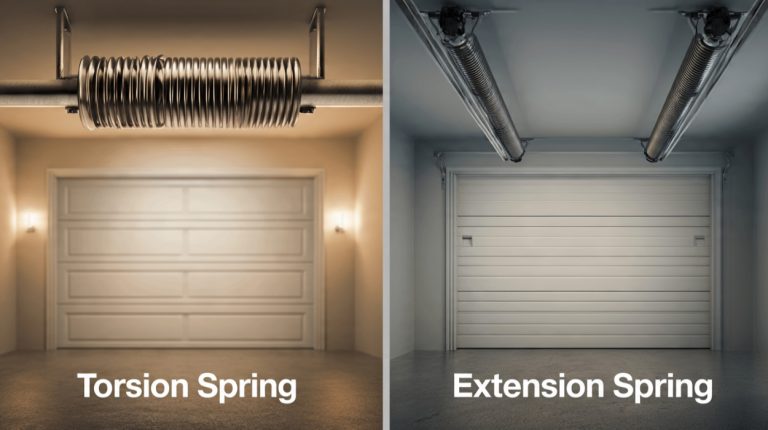
The short answer: if you see one thick coiled spring running horizontally above the garage door opening along a steel shaft, that is a torsion spring. If you see two longer springs stretched along the sides of the door track going back into the ceiling, those are extension springs. Both types do the same job of counterbalancing your door’s weight, but they do it in completely different ways, and the differences matter a great deal for safety, lifespan, and repair costs right here in Wichita.
Let’s walk through all of it clearly so you can make an informed decision.
Why Your Garage Door Spring Matters More Than You Think
Most homeowners in Wichita have never given their garage door springs a second thought until the morning the door simply will not budge. That is completely understandable. Springs sit quietly in the background, working thousands of times with no fanfare, until one day the metal fatigue catches up.
Here is the thing people often miss: your garage door spring is doing an enormous amount of work every single time you use that door. A standard residential garage door weighs anywhere from 130 to 400 pounds depending on the material and insulation. Without functioning springs, that weight falls entirely on the opener motor, the cables, and the tracks. None of those components are designed to carry that load alone. A broken spring is not just an inconvenience. It is a safety issue and a potential liability for your home, your car, and your family.
Kansas winters make the situation even more pressing. Cold temperatures cause metal to contract, and torsion springs in particular are known to snap during early morning cold snaps when the steel is at its most brittle. If you have ever heard a sharp bang from inside your garage on a frigid Wichita morning, that was almost certainly a spring failure.
Understanding which type of spring you have, how it works, and what the warning signs of failure look like will help you respond faster, spend smarter, and stay safer.
What Is a Torsion Spring and How Does It Work?
A torsion spring is a tightly wound coil spring mounted horizontally on a steel torsion bar directly above the garage door opening. It is usually positioned in the center of the wall above the door, though some systems use two torsion springs side by side for heavier or wider doors.
The physics behind a torsion spring are straightforward. When your garage door closes, the spring winds up and stores energy in the coil. When you press the opener button to raise the door, that stored energy releases in a controlled twist, rotating the drum and cable system that lifts the door evenly from both sides. The winding and unwinding action is what gives torsion springs their name because torsion simply refers to the twisting force applied to an object.
Because the force is distributed evenly across a shaft rather than pulling from two separate points, torsion spring systems tend to produce a smoother, quieter operation. The door rises and lowers in a more balanced way, which reduces stress on the opener, the rollers, and the tracks over time.
Torsion springs are the standard for virtually all newer garage doors installed in Wichita over the past decade or so. They are built for higher-cycle lifespans, typically rated for 15,000 to 20,000 cycles, which at two uses per day translates to roughly 20 to 27 years of service under normal conditions.
One more thing worth knowing: when a torsion spring breaks, it typically stays on the shaft. The metal may split or uncoil partially, but the shaft contains the failure. That is a meaningful safety advantage compared to extension springs, which we will get to next.
What Is an Extension Spring and How Does It Work?
Extension springs are long coiled springs that run along the horizontal overhead tracks on each side of the garage door. You will find one on the left track and one on the right. Unlike torsion springs, which wind and unwind, extension springs do exactly what their name suggests: they stretch and contract.
When you close the garage door, the springs stretch outward as the door descends, storing energy in the extended coil. When you raise the door, the springs contract and pull the door upward through a pulley and cable system. You can actually watch extension springs in action if you stand safely to the side of your garage and observe the door moving. The springs visibly lengthen and shorten with every cycle.
Extension springs are more common in older Wichita homes, particularly those built before the mid-2000s. They were widely used for decades and are still functional on many properties across the city. However, they come with some important limitations compared to modern torsion spring systems.
The most significant concern is safety. When an extension spring breaks, it does so with sudden, violent energy release. Without a safety cable running through the center of the spring, a broken extension spring can fly off the track at high speed, traveling across the garage in a fraction of a second. This is genuinely dangerous. Responsible installation always includes safety cables threaded through the extension springs as a containment measure, but not every older system has them properly in place.
Extension springs also tend to wear out faster, with most rated for around 10,000 cycles. They involve more moving parts between the spring, pulley, cable, and track hardware, which creates more opportunities for individual component failures. If one spring wears out faster than the other, which happens regularly, the door may start to lift unevenly, putting additional strain on the opener and the tracks.
Read This Also: Garage Door Making a Loud Popping Noise: Common Causes Explained
Torsion vs Extension: The Key Differences at a Glance
Understanding the comparison between these two systems helps Wichita homeowners make better decisions when it comes time for a repair or replacement. Here is how they stack up across the areas that matter most.
Location and Appearance
Torsion springs sit directly above the closed garage door, mounted horizontally on a metal shaft. They are compact, dense, and usually sit close to the wall. Extension springs run along the ceiling tracks on both sides of the door. They are longer, more visible, and easier to spot from across the garage.
Operating Mechanism
Torsion springs store and release energy through twisting force. Extension springs store and release energy through stretching and contracting. The torsion method distributes load more evenly, while extension springs work through pull-force at two separate points.
Lifespan
Torsion springs typically last between 15,000 and 20,000 cycles. Extension springs generally max out around 10,000 cycles under normal use. For a Wichita household that opens and closes the garage door three or four times daily, that difference can mean torsion springs lasting twice as long before needing replacement.
Safety Profile
Torsion springs fail in a more contained way because the shaft holds the broken coil. Extension springs can snap and fly free, especially if they lack proper safety cables. From a risk management standpoint, torsion springs are the safer choice.
Noise and Smoothness
Torsion spring systems operate more quietly and produce less vibration because the lifting force is centralized and even. Extension spring systems can create more noise, especially as components age or pulleys develop wear.
Cost
Extension springs are generally cheaper to purchase as individual components, which is part of why they were so common in older residential construction. Torsion springs cost more upfront but often prove more economical over a home’s lifetime because they require fewer replacements and cause less wear on the rest of the door system.
Compatibility
Torsion springs handle heavier doors well, including insulated steel, wood, and carriage-style doors that are common in many Wichita neighborhoods. Extension springs work best with lighter doors. As homeowners upgrade to heavier, better-insulated doors, torsion spring systems are almost always the recommendation.
How to Identify Which Type of Spring Your Wichita Garage Has
You do not need any tools to figure this out. Stand inside your garage with the door closed and look up. Here is what to look for:
If you see one or two tightly wound coils sitting horizontally on a metal bar centered directly above the top of the garage door, that is a torsion spring system. The coils will be compact, dense, and typically between 18 and 36 inches long depending on your door size and weight.
If you see long springs running parallel to and slightly above the horizontal track sections on either side of the door, stretching back toward the rear of the garage, those are extension springs. They will typically have a cable running through their center if properly installed with safety cables.
Some systems have two torsion springs side by side on the same shaft. This is common in wider or heavier doors, including two-car garage doors that are 16 feet wide or larger. The dual spring setup simply provides additional lift capacity.
If you are still unsure after looking, you can also identify your spring type by watching the door operate from a safe distance. In a torsion spring system, the spring will twist slightly and the cables will wind around the drums on either side of the shaft. In an extension spring system, you will see the springs physically elongate as the door goes down.
One important caution: never touch either type of spring, examine worn hardware up close, or attempt to manually wind or adjust any spring in your system. The stored energy in garage door springs is substantial enough to cause serious injury. Identification is something you can safely do from a distance. Adjustment and repair are not.
Read This Also: My Garage Door Remote Stopped Working — Quick Fixes to Try First
Common Warning Signs That Your Garage Door Spring Is Failing
Knowing what to watch for before a spring breaks completely can save you the stress of a full failure. Here are the signs Wichita homeowners should pay attention to regardless of which spring type they have.
The door feels unusually heavy when you try to lift it manually. Because springs counterbalance the door’s weight, a weakening spring means that counterbalance is fading and the door becomes harder to move by hand.
The door moves unevenly, rising higher on one side than the other, which typically indicates that one extension spring has more wear than the other or a torsion spring has lost proper tension.
You hear grinding, squeaking, or scraping sounds during operation. These sounds often point to worn pulleys, fraying cables, or a spring that is binding rather than moving freely.
The door opens only partway and then strains or stops. This behavior commonly signals that the spring does not have enough remaining tension to complete a full lift cycle.
You notice visible gaps or separations in the coil of a torsion spring. A properly wound spring should look like a continuous, evenly spaced coil. Visible gaps mean the spring has already broken and the door is operating on one spring or on raw opener motor power.
The door slams shut much faster than usual. If springs are failing, they stop providing the controlled descent that allows the door to close gently. Gravity takes over and the door drops faster than normal.
If you are experiencing any of these symptoms with your Wichita home’s garage door, getting a professional inspection scheduled quickly is far better than waiting until the spring fails. Our team at Wichita Garage Door Experts responds same day and can assess your spring system safely, accurately, and without any surprise charges.
Should You Replace Just One Spring or Both?
This is one of the most common questions homeowners ask when a garage door spring breaks. The answer almost always leans toward replacing both springs at the same time, and here is the practical reason why.
Garage door springs are installed in pairs, whether torsion or extension, and they experience roughly the same amount of wear over their lifetime. If one spring has failed after a given number of cycles, the other spring is at approximately the same point in its fatigue cycle. Replacing only the broken spring and leaving the worn one in place typically leads to the second spring failing within a few weeks or months. You end up paying for two service calls when one would have covered everything.
There is also a balance consideration. Two springs of different ages and condition will have different tension levels, which creates uneven lifting and added stress on the opener and tracks. Matching spring pairs operate as an integrated system, and keeping them balanced matters for the long-term health of the entire door.
Some homeowners try to stretch out the cost by only replacing the broken spring, and that is understandable when budgets are tight. If cost is a concern, just know what you are likely dealing with down the road. A good technician will explain both options honestly and let you decide.
Can You Convert Extension Springs to Torsion Springs?
Yes, and in many cases it is a worthwhile upgrade for Wichita homeowners with older garage doors still running on extension spring systems.
A torsion spring conversion involves installing a torsion bar assembly above the door, removing the existing extension springs, pulleys, and related hardware, and rewiring the cable system to work with the new setup. It requires professional installation and the right parts for your specific door’s weight and height.
The benefits of converting are meaningful. You gain a safer system that contains spring failures more effectively. You gain a longer-lasting spring rated for significantly more cycles. You get quieter, smoother door operation. And you reduce the total number of moving parts in the system, which generally means fewer things can break at separate times.
The conversion does cost more than a straightforward spring replacement, but for homeowners planning to stay in their Wichita home for many years, it often pays off through fewer repairs, better door performance, and reduced wear on the opener over time.
If you are considering a conversion or simply want an honest assessment of whether your current spring system makes sense to keep, the garage door spring repair specialists at Wichita Garage Door Experts can walk you through exactly what your door needs and what makes financial sense for your situation.
Why DIY Spring Repair Is Genuinely Dangerous
We want to be straightforward about this because there is a lot of DIY content online that downplays the real risks involved with garage door spring work.
Garage door springs, both torsion and extension types, are under extreme tension even when a door sits at rest. A standard torsion spring stores enough energy when wound that if it releases uncontrollably it can cause severe lacerations, broken bones, or worse. Extension springs that snap without safety cables in place travel fast enough to cause serious injuries or significant property damage.
The winding and unwinding of torsion springs in particular requires specialized winding bars and a precise understanding of the correct number of turns for your door’s specific weight and spring specifications. Guessing or improvising on that process creates unpredictable tension that can cause immediate failure or set up a future failure under the worst possible conditions.
This is not about upselling professional service. It is a genuine risk assessment. Garage door spring replacement consistently ranks among the most injury-prone home repair tasks attempted without professional training. The time and money saved by a DIY attempt is not worth the risk when a qualified technician can complete the job safely and quickly.
Read This Also: Why Is My Garage Door Reversing Before It Hits the Ground?
What Affects Garage Door Spring Lifespan in Wichita Specifically?
Wichita’s climate plays a real role in how garage door springs age and how quickly they reach the end of their service life. Here are the local factors that matter.
Temperature swings in Kansas are dramatic. Wichita experiences genuine freezing winters and hot summers, and the repeated expansion and contraction of metal through extreme temperature ranges accelerates the fatigue process in steel coils. This is particularly true for unheated garages where the springs are exposed to full ambient temperature shifts.
Humidity and moisture exposure are also factors. Springs that develop surface rust are weakened structurally, and rust progresses faster on springs that are not lubricated regularly. A simple application of a silicone-based or garage door specific lubricant a couple of times per year can meaningfully extend spring life by reducing friction and providing a barrier against moisture.
Usage frequency matters more than most homeowners realize. Households that use the garage door four to six times daily are burning through spring cycles much faster than homes where the door is used once or twice. High-cycle springs, which are rated for 25,000 or even 50,000 cycles, are available for heavy-use situations and are well worth considering during a spring replacement if your household is particularly active.
Poor initial installation, including incorrect spring sizing or improper tension calibration, also shortens spring life significantly. Springs installed with the wrong wind count or for the wrong door weight are working harder than they should from day one.
What to Expect From Professional Spring Repair in Wichita
When you call a reputable garage door company in Wichita for a spring repair or replacement, here is what the process should look like.
A technician arrives and performs a complete assessment of the door system, not just the springs. This matters because a broken spring sometimes reveals secondary issues with cables, drums, rollers, or the opener that contributed to the failure or were worsened by it.
The technician explains what they found in plain language, gives you a clear quote before any work begins, and answers your questions. There should be no pressure and no surprise charges added after the fact.
The repair itself typically takes between 45 minutes and two hours depending on the system type and any secondary issues. Replacement parts for common Wichita residential door configurations are usually stocked on the service truck, meaning same-day completion is the standard rather than the exception.
After the repair, the technician should test the door through several full open and close cycles, check the balance manually, and verify that the opener is operating within its proper limits. A door that passes all those checks is ready to go.
If you ever need emergency garage door repair in Wichita because a spring has failed and left your car trapped or your garage wide open overnight, the team at Wichita Garage Door Experts is available around the clock. Spring failures do not follow business hours, and neither do we.
How Long Does a Spring Replacement Take and What Does It Cost?
For most straightforward torsion or extension spring replacements on standard residential garage doors in Wichita, a technician can complete the job in under two hours. Most are done in 45 to 90 minutes. The timeline stretches a bit for doors that need secondary repairs, heavier commercial doors, or conversions from extension to torsion systems.
Costs vary based on the spring type, the size and weight of your door, whether you are replacing one or both springs, and whether any secondary components need attention. Extension spring replacements are generally lower in parts cost but require careful pulley and cable checks. Torsion spring replacements involve more labor precision because the spring must be wound to the exact specifications for your door.
The best approach is always to get a clear written quote before any work begins. At Wichita Garage Door Experts, estimates are free and there are no hidden charges added after the job. What you approve is what you pay.
Frequently Asked Questions About Garage Door Springs in Wichita
Can I operate my garage door with a broken spring? Technically the opener may still activate, but operating a door with a broken spring is hard on the opener motor and the rest of the door system. It can cause secondary damage quickly. It also creates a safety risk if the door loses support mid-cycle. Avoid using the door until the spring is replaced.
How do I know if my spring is broken or just needs adjustment? A completely broken torsion spring will have a visible gap in the coil. A broken extension spring may be hanging loosely or at an unusual angle. If the spring looks intact but the door still struggles, a tension adjustment or cable issue may be involved. Either way, a professional inspection is the right next step.
Is one brand of spring better than another? Quality matters more than brand in most cases. Higher-cycle springs made from oil-tempered steel last longer than budget springs regardless of the name on the box. When a technician recommends a particular spring specification, they should be able to explain the cycle rating and why it suits your door.
Does homeowner’s insurance cover broken garage door springs in Wichita? Standard homeowner’s insurance policies typically cover damage caused by sudden external events but not general mechanical wear and tear. A spring that fails due to normal fatigue is usually considered a maintenance issue. Check your specific policy for details, but most spring replacements are out-of-pocket expenses.
My garage door is making a loud noise but still works. Could it be the spring? Loud operation can point to worn springs, but it also commonly comes from dry or worn rollers, loose hardware, or a pulldown issue with the opener itself. A thorough inspection will identify the exact source rather than guessing from symptom alone.
The Bottom Line for Wichita Homeowners
Garage door springs are the hardest-working component in your door system, and they deserve attention before they reach the point of failure. Now that you know the difference between torsion and extension springs, how to identify which one you have, what the warning signs of wear look like, and why professional repair is the right call, you are in a much better position to handle whatever happens next.
Whether your spring just snapped, you are hearing sounds that worry you, or you simply want a professional set of eyes on your door before winter arrives, the team at Wichita Garage Door Experts is ready to help. We serve homeowners across Wichita, Derby, Andover, Maize, Bel Aire, and the surrounding Sedgwick County area with honest, same-day service and no hidden charges.
Call us at (316) 294-1225 or request your free estimate online. We will take it from there.
