
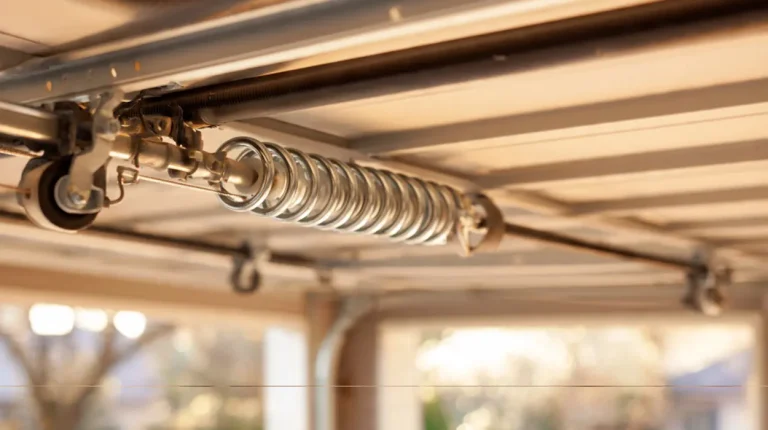
If your garage door is making a loud popping noise, the most likely cause is a problem with your torsion springs. These high-tension springs handle the full counterbalancing weight of your door every single time it moves. When they start to wear out, crack, or snap entirely, the resulting sound can be startling. But a broken spring is not the only explanation. Worn rollers, loose hardware, temperature-driven metal expansion, misaligned tracks, and even a faulty opener can all produce that sharp, unsettling pop you keep hearing.
The good news is that most of these problems are diagnosable with a basic visual inspection. The less good news? Several of them involve components under serious mechanical tension, which means the repair itself should be left to a professional.
Let us walk through every likely cause, what to look for, and what to do about it.
Why Garage Door Noises Should Never Be Ignored
Before jumping into the causes, it is worth addressing why so many homeowners put this off. A popping sound does not always mean the door has stopped working. That is exactly what makes it easy to delay action.
But here is the reality: garage doors weigh anywhere from 130 to over 400 pounds depending on the material and size. The springs, cables, rollers, and tracks work together as a precisely tensioned system. When one part starts showing stress, it transfers that load to everything connected to it. A worn spring that is making noise today is a broken spring that leaves your door inoperable tomorrow. Catching it early is almost always significantly cheaper than waiting.
Cause 1: Torsion Spring Problems (The Most Common Culprit)
Torsion springs are mounted horizontally above your garage door along a metal shaft. They store and release rotational energy to help the opener lift the door with minimal strain. A standard residential torsion spring is rated for somewhere between 10,000 and 20,000 cycles depending on the gauge of the wire and the manufacturer.
When a torsion spring starts to fatigue near the end of its lifespan, or when a coil cracks under stress, the tension releases suddenly. That sudden energy release is what produces the loud, sharp pop you heard. In some cases, the spring snaps completely. In others, it simply develops a small fracture that causes a repetitive popping sound each time the door cycles.
If you look above your door and notice a gap in the spring coil, or if the spring appears to be in two separate pieces, that confirms a break. Do not attempt to operate the door or replace the spring yourself. Torsion springs are under extreme mechanical tension and can cause serious injury if handled without proper training and tools.
Our team at Wichita Garage Door Experts handles garage door spring repair in Wichita, KS as one of our most common same-day services. If you suspect your spring is the source of that popping sound, call us before you try to operate the door again.
Cause 2: Extension Springs Under Stress
Not all garage doors use torsion springs. Some older residential doors and lighter single-panel doors use extension springs, which run along the horizontal tracks on either side of the door. These springs stretch and contract as the door moves, and over time they develop wear points, rust, and fatigue fractures.
Extension springs can produce a sharp popping or snapping noise when a coil fails or when the spring has become so dry and corroded that individual coils catch against each other under load. Unlike torsion springs, extension springs also carry the risk of flying loose if they snap without a safety cable running through them.
If your door uses extension springs and you notice either a popping sound or visible rust and corrosion on the spring body, both deserve immediate professional attention.
Read This Also: My Garage Door Remote Stopped Working — Quick Fixes to Try First
Cause 3: Worn or Damaged Rollers
Rollers are the small wheels that ride inside the vertical and horizontal tracks on either side of your garage door. A standard door has between ten and twelve rollers depending on its height. These components handle the full weight of the door with every cycle and gradually wear down over time.
There are three main roller types: nylon, steel, and plastic. Steel rollers are durable but prone to rust. Plastic rollers wear out relatively quickly. Nylon rollers are quieter and longer-lasting but still degrade over years of use. When any roller develops a flat spot, cracks in the wheel, a seized bearing, or loses its ability to spin freely in the bracket, the result is often a sharp popping or snapping sound as the door moves.
You can sometimes identify roller issues by watching the door move slowly. If you notice a roller that is grinding, wobbling, or failing to spin cleanly in the track, that roller needs replacement. Replacing worn rollers is one of the more straightforward repairs and dramatically reduces operational noise across the board.
Cause 4: Loose or Worn Hinges
Hinges connect the individual panels of your sectional garage door and allow the door to fold as it travels up and over the horizontal tracks. A standard sectional door has multiple hinges, typically one at each panel joint on both sides.
Over time, the hinge bolts loosen from the vibration of daily operation. A loose hinge will shift slightly under load, and that shift can produce a clicking or popping sound when the door changes direction or when a panel joint folds under the weight transition from the vertical track to the horizontal.
Worn hinges can also develop cracks or stress fractures at the hinge pin or bracket. A cracked hinge produces a sharper, more sudden pop compared to the dull clunking of a loose bolt. Inspecting the hinges is straightforward: look for hinges that appear misaligned, have visible cracks around the mounting holes, or wiggle noticeably when you push on the panel joint by hand.
Tightening loose hinge bolts with a socket wrench is a simple fix that homeowners can often handle safely. Cracked or structurally compromised hinges need replacement.
Cause 5: Temperature Driven Metal Expansion and Contraction
If you live anywhere with significant temperature swings, which certainly applies to Wichita, Kansas, you may notice that your garage door is noisiest during the early morning in winter or during the transition from cool nights to warm afternoons in spring and fall.
Metal expands when it heats up and contracts when it cools down. The springs, tracks, hinges, and hardware of your garage door are all subject to this thermal movement. When multiple metal components shift against each other during temperature-driven expansion or contraction, the result can be a popping or cracking sound that occurs without any obvious mechanical failure.
If the popping only happens during extreme temperature transitions and disappears once the garage reaches a consistent temperature, it is often thermal expansion at work. That said, thermal movement can also accelerate the loosening of hardware over time. So even if the noise turns out to be temperature-related, it is worth using it as a prompt to check your hardware tightness seasonally.
Cause 6: Misaligned or Bent Tracks
The steel tracks on either side of your door need to be precisely aligned, parallel to each other, and properly gapped relative to the roller. When a track gets bent from an impact, shifts out of alignment from a loose mounting bracket, or develops a section where the roller binds, you will hear it.
Misaligned tracks often produce a more prolonged grinding or scraping sound, but they can also cause popping when a roller catches against a bent section of the track and then releases under pressure. You can inspect your tracks visually by looking along their length from the bottom of the door. Any visible bends, gaps from the wall brackets, or sections where the track is visibly out of parallel with its counterpart on the other side deserve attention.
Track alignment issues should be corrected by a professional. Forcing a door to operate on misaligned tracks puts excessive strain on the rollers, springs, and opener, and creates a real risk of the door coming off the track entirely. If you have already experienced your door going off track, our garage door off-track repair service in Wichita can get everything back in proper alignment quickly.
Cause 7: Opener Chain or Belt Issues
If you have a chain-drive opener, the chain runs along a rail above the door and drives a trolley that pulls the door open and pushes it closed. Over time, the chain can stretch and develop slack. A loose chain slaps against the rail during operation, producing a sharp snapping or popping sound with each cycle.
Belt-drive openers are significantly quieter, but the belt itself can develop cracks or mistrack on the drive sprocket, leading to irregular sounds during operation.
You can check for chain slack by looking at the chain while the opener is at rest. The chain should have minimal droop, roughly half an inch to three-quarters of an inch below the rail at its center point. More slack than that indicates the chain needs tightening according to your opener manufacturer’s specifications.
Screw-drive openers have their own noise profile and can develop popping sounds when the drive screw becomes dry or corroded and the trolley carriage begins to skip along the threads rather than glide smoothly.
Read This Also: Why Does My Garage Door Only Open Partway? Causes, Fixes, and When to Call a Pro
Cause 8: Lack of Lubrication Across Moving Parts
This one gets overlooked more than any other cause because it sounds almost too simple. But an under-lubricated garage door system is one of the most common sources of unusual noises, including popping, that we see on service calls.
The springs, hinges, rollers, and the pivot points where the door’s lift cables connect to the bottom brackets all need periodic lubrication to move smoothly. When metal rubs against dry metal under tension and load, the friction builds until the components catch and then release suddenly. That catch-and-release is what produces the popping sound.
The correct lubricant for garage door components is a silicone-based spray or white lithium grease. Do not use WD-40 as a lubricant. It is a water displacer and degreaser, not a long-lasting lubricant, and it can actually accelerate wear on springs and hinges by stripping away protective coatings. Apply lubricant to the spring coils, hinge pivot points, roller stems and bearings, and the bearing plates at the ends of the torsion spring shaft. Avoid getting lubricant inside the tracks themselves, as this can cause the rollers to slip.
A good lubrication schedule is once every six months. Many homeowners do it at the beginning of spring and the beginning of fall, which aligns well with the seasonal temperature changes that already stress garage door hardware.
When the Popping Sound Means Stop Using the Door Immediately
Most noise-related garage door issues fall into the category of “get it checked soon.” But there are situations where the sound you heard is a signal to stop using the door right now and call for emergency repair:
You heard a single very loud bang or snap, louder than the usual operational noise of the door, followed by the door becoming extremely heavy, refusing to open, or hanging crooked. This pattern almost always describes a torsion spring failure. Operating the door after a spring breaks can damage the opener, bend the tracks, and snap the lift cables.
The door suddenly stopped mid-travel and now moves only with significant effort or not at all. This can indicate a spring on the verge of full failure or a cable that has snapped.
You can visibly see a broken spring, a frayed or snapped cable, or a roller that has popped out of the track.
In any of these situations, disengage the opener if you can do so safely from the inside using the red emergency release cord, and leave the door in its current position. Contact a professional immediately rather than trying to force the door to move. Our emergency garage door repair team in Wichita is available around the clock for exactly these situations.
A Quick DIY Inspection Checklist Before You Call
If the popping sound is intermittent, mild, or newly started, here is what you can check yourself before picking up the phone. This is a visual and manual inspection only: do not attempt to adjust springs or cables.
Look at the torsion spring above the door for any visible gaps in the coils or signs of a split. Walk along both tracks and look for visible bends, gaps from the mounting brackets, or sections that appear misaligned. Push on each panel joint by hand gently and listen or feel for loose hinge movement. Look at the chain or belt on the opener for visible slack or damage. Check the rollers as the door moves by watching each one: they should spin cleanly without wobbling or binding. Try lubricating the springs, hinges, and roller stems with a garage door lubricant and running the door through a full cycle to see if the sound changes or disappears.
If the noise persists after lubrication, or if you found anything concerning in the visual inspection, it is time to bring in a professional.
How Often Should You Have Your Garage Door Serviced?
Most manufacturers and garage door professionals recommend a full tune-up and inspection once per year. This includes lubrication of all moving parts, hardware tightening, spring tension testing, balance testing, opener force adjustment, and safety reversal testing.
In Wichita, where temperature extremes are real and seasonal, twice per year is a reasonable target. The inspection visits are inexpensive relative to what they prevent, and they catch the kind of developing wear that produces popping noises before it becomes a spring failure that leaves your car trapped in the garage on a workday morning.
Read This Also: Garage Door Sensor Blinking Red: What It Means and How to Fix It
Why Wichita Homeowners Trust Us With Their Garage Doors
At Wichita Garage Door Experts, we have been diagnosing and repairing exactly these kinds of problems for Wichita homeowners for over five years. When you describe a popping, snapping, or banging sound from your garage door, our technicians know from experience where to look first, what the most likely causes are based on your door’s age and type, and how to give you an honest assessment of what actually needs fixing.
We do not recommend unnecessary parts. We show up same day in most cases. We carry the components needed to handle the most common repairs on the spot, including spring replacement, roller replacement, hinge replacement, and cable repair. And we back every repair with our workmanship guarantee.
If your garage door is making a sound that has you concerned, do not wait to find out whether it is serious. Call us at +1 316-294-1225 or request a free estimate online and we will take a look.
Frequently Asked Questions
Is a popping noise from my garage door dangerous?
It depends on the cause. A popping noise from a failing torsion spring is genuinely dangerous because a full spring break under tension can cause the door to drop suddenly or the spring to release violently. Popping from loose hardware or thermal expansion is less immediately dangerous but still worth addressing. When in doubt, stop using the door and have it inspected.
Can I still use my garage door if it is making a popping noise?
If the door is still operating normally and the popping is mild and intermittent, you can typically continue using it while scheduling a service call soon. If the door feels heavier than usual, moves unevenly, or the popping is accompanied by visible damage to any component, stop using the door and call for professional help.
How long do garage door springs typically last?
Standard torsion springs are rated for roughly 10,000 cycles. At two cycles per day, that works out to approximately seven to ten years of normal residential use. Springs rated for 20,000 or 30,000 cycles are available and extend that lifespan considerably. If your springs are approaching or past the ten-year mark, a proactive replacement is worth considering even before a failure occurs.
Why does my garage door pop only in cold weather?
Cold temperatures cause metal to contract. When the steel components of your door tighten from cold contraction and then begin to expand as temperatures rise, the movement between parts can produce popping sounds. This is especially common in older doors with hardware that has accumulated some play over time. It is generally not alarming on its own but is a good prompt to check for loose hardware and lubricate the system.
Can lubrication fix a popping garage door?
It can, if the underlying cause is dry metal-on-metal friction. Apply silicone lubricant or white lithium grease to the springs, hinges, roller stems, and bearing plates. If the popping continues after lubrication, the cause is mechanical and needs professional diagnosis.
