
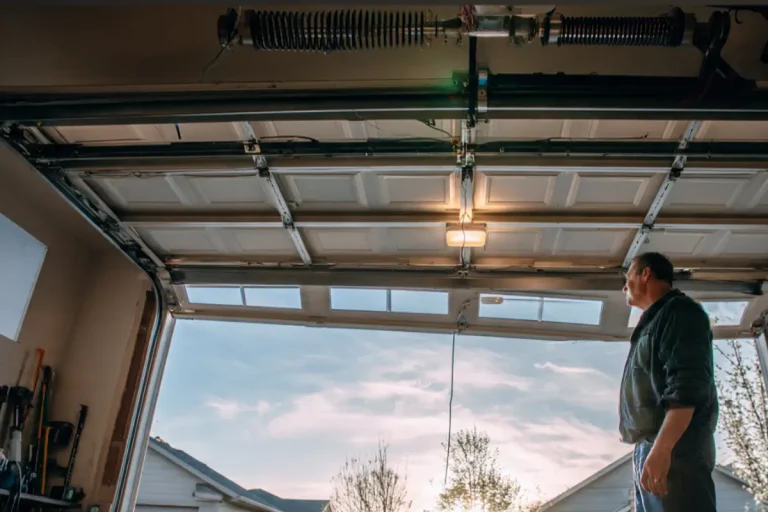
If your garage door only opens partway and stops, the most likely cause is a broken or worn torsion spring that no longer has enough tension to lift the door to its full height. Other common culprits include misaligned or obstructed tracks, incorrect opener travel limit settings, faulty safety sensors, damaged lift cables, or a weakening opener motor. Most of these problems have clear warning signs, and once you know what to look for, you can quickly figure out whether it is something you can address yourself or whether it is time to call a licensed garage door technician.
Let us walk through every possible cause in detail so you understand exactly what is happening with your door and what needs to happen next.
Why This Problem Deserves Immediate Attention
A garage door that stops halfway is more than just inconvenient. It is a sign that something in the mechanical or electrical system is under stress. Ignoring it means the affected component keeps absorbing that stress every time you operate the door, which almost always leads to a bigger, more expensive failure down the road.
There is also a safety angle here. A door that stops unexpectedly mid-travel, especially one held up by a struggling spring or fraying cable, can drop without warning. That is dangerous for anyone near the opening, and it can cause serious damage to your vehicle or belongings stored underneath.
The good news is that most of the causes below are very fixable when caught early.
The Most Common Reasons a Garage Door Opens Partway
Broken or Worn Torsion Springs
This is the number one reason homeowners in Wichita and across the country find their garage door stalling before it reaches the top. Torsion springs are tightly wound metal coils mounted horizontally above the door. Their job is to counterbalance the weight of the door so the opener motor does not have to work too hard. When a spring loses tension or snaps, the door suddenly feels much heavier to the opener, and the motor simply cannot pull it any further.
You can test this yourself by pulling the emergency release cord (the red rope hanging from the opener track) and trying to lift the door manually. If it feels extremely heavy or you cannot raise it smoothly to shoulder height, your spring is almost certainly the problem.
One important note: torsion spring replacement is not a safe DIY project. These springs are stored under several hundred pounds of tension, and if one releases suddenly during a repair attempt, the consequences can be severe. If you suspect a broken spring, contact a professional. Our team at Wichita Garage Door Experts handles garage door spring repair in Wichita, KS, safely and efficiently, usually the same day you call.
Misaligned or Damaged Tracks
Your garage door rides along two vertical tracks on either side of the opening, then transitions to horizontal tracks running toward the back of the garage. If any section of those tracks is bent, dented, or has shifted out of alignment, the door will bind at that point and refuse to travel further.
Track problems are surprisingly common, especially in homes where a vehicle has ever clipped the door frame or in garages where the building has settled slightly over time. You might hear a grinding or scraping noise right before the door stops, which is often the door panel dragging against a misaligned section of rail.
Minor track issues can sometimes be corrected by loosening the mounting bolts, gently nudging the track back into position, and retightening. Severe bends usually require track replacement. Either way, getting this looked at quickly prevents roller and panel damage from spreading.
Incorrect Travel Limit Settings on the Opener
Every garage door opener has a built-in travel limit setting that tells the motor how far to run before it considers the door fully open. If this setting is programmed too short, the opener will cut power before the door reaches the top, leaving it stuck at whatever height the limit is currently set to.
This is actually one of the easier problems to fix. Most modern openers from brands like LiftMaster, Chamberlain, and Genie have limit adjustment controls either on the back of the motor unit or accessible through the manufacturer’s app. Adjusting travel limits is something a reasonably handy homeowner can do, but if you are not comfortable working near the opener unit, professional services such as affordable garage door repair Sunrse FL can help a technician recalibrate the opener safely and quickly in just a few minutes.
Read Also: Garage Door Sensor Blinking Red: What It Means and How to Fix It
Obstructed or Misaligned Safety Sensors
Garage door safety sensors sit near the floor on both sides of the door opening, typically about four to six inches off the ground. They emit an invisible beam across the opening. If that beam is broken or the sensors fall out of alignment with each other, the opener interprets it as an obstruction in the door’s path and either stops mid-travel or refuses to move at all.
Dust, dirt, spider webs, and even strong sunlight hitting the sensor lens directly can trigger this response. The fix is often as simple as wiping the sensor lenses clean and gently adjusting each sensor until the indicator lights on both units glow steady. If your sensors are genuinely faulty and not just dirty or misaligned, they will need to be replaced. Our garage door sensor repair service in Wichita can diagnose and resolve sensor issues quickly so your door operates safely and fully.
Damaged or Frayed Lift Cables
Lift cables run from the bottom brackets of the door up and around the cable drums at the top of the track system. They work in tandem with the springs to guide the door smoothly through its travel path. When a cable frays, unwinds from the drum, or snaps entirely, the door loses balanced support on that side, causing it to bind in the track and stop moving.
A partially frayed cable might allow the door to travel partway before the cable can no longer bear the load, which is exactly the symptom you are experiencing. This is another repair that carries real safety risk if attempted without the proper tools and experience, since cables are under tension and connected to loaded spring systems.
A Weakening Opener Motor
Garage door openers are designed to last roughly 10 to 15 years under normal use, and many last longer. But as a motor ages, it gradually loses the torque needed to drive the door through its full range of motion. An older opener might manage to lift the door two thirds of the way up before the motor stalls out.
If your opener hums loudly but the door barely moves, or if it seems to push the door a few feet and then give up, motor wear is a likely culprit. A motor that is on its way out will often behave inconsistently as well, working fine on a cool morning and struggling on a hot afternoon when heat affects its internal components.
Depending on the age and condition of the opener, repair or full replacement may make more sense. Our technicians can assess your unit and give you an honest recommendation.
Track Obstructions and Debris
Sometimes the issue is simpler than any mechanical failure. Small objects like pebbles, hardened grease, built-up dirt, or even a small bolt that has fallen from a bracket can lodge in the track and stop the door cold at that exact point. This is especially common in older garages that have not had routine maintenance in several years.
Inspect the full length of both tracks visually. Run your hand along the inside of the track to feel for any debris or rough spots. A buildup of old lubricant mixed with dust can create a sticky obstruction that is not immediately obvious by sight.
Cold Weather and Lubrication Problems
Here in Wichita, Kansas winters can be brutal on mechanical systems. Cold temperatures cause metal components to contract, and old or dried out lubricant can thicken to the point where it creates resistance rather than reducing it. Springs become stiffer in the cold, and rollers that are already worn struggle more against frozen grease in the tracks.
If your door began opening only partway shortly after a cold snap, lubrication and temperature effects are worth considering. A fresh application of quality silicone or lithium-based garage door lubricant on the tracks, rollers, springs, and hinges can make a noticeable difference. Avoid using WD-40 on these components as it is a degreaser, not a long-term lubricant, and it will dry out quickly.
Worn or Damaged Rollers
Rollers are the small wheels that guide the door panels along the track. Standard nylon rollers last roughly five to seven years, while steel rollers can go longer with proper maintenance. When rollers crack, chip, or develop flat spots from wear, they create drag and resistance that builds up at the same point in the door’s travel every time.
If you hear a grinding or rattling sound at a consistent point during the opening cycle and then the door stalls, a worn roller at that section of track is a strong candidate. Roller replacement is one of the more accessible garage door repairs and can often be completed without replacing any other components.
Read Also: Why Is My Garage Door Reversing Before It Hits the Ground?
A Quick Diagnostic Checklist Before You Call
Before picking up the phone, it is worth spending five minutes running through these basic checks. They will not fix every problem, but they can rule out the simplest causes quickly.
Check for physical obstructions first. Look along both tracks and in the door’s travel path for anything that should not be there.
Inspect the sensor lights. Both sensors should show steady indicator lights. A blinking or unlit sensor means misalignment or a blocked lens.
Try the manual operation test. Disengage the opener with the emergency release cord and lift the door by hand. If it is very heavy or binds at a certain height, the problem is mechanical rather than electrical.
Listen during operation. A grinding noise points to track or roller issues. A loud pop or snap before the door stopped moving suggests a broken spring or cable. Silence with motor humming suggests an opener motor or travel limit issue.
Check for visible spring damage. Look at the torsion spring mounted above the door. If you see a gap in the coils or the spring is visibly separated, it is broken and the door should not be operated until it is replaced.
If any of these checks point to springs, cables, or significant track damage, stop and call a professional. These are not repairs to push through without the right tools and training.
What Happens If You Keep Using a Partially Opening Door
It is tempting to just duck under the door or reverse the car at a slightly lower angle and carry on with your day. But every time you operate a garage door that has an underlying problem, you are putting additional stress on the components that are still working.
A struggling opener motor burns out faster under increased load. A partially frayed cable can snap completely with no warning. A door that is sticking due to a misaligned track will gradually bend its panels and rollers with every cycle. What starts as a relatively affordable repair can become a much more costly replacement project if the problem is left to compound over time.
When to Call a Professional Garage Door Technician
The following situations should always be handled by a licensed professional rather than attempted as a DIY repair:
Anything involving torsion or extension springs. The stored energy in these components makes them extremely dangerous to work with without specialized winding tools and training.
Broken or frayed lift cables. Cables connected to loaded spring systems can release suddenly and cause serious injury.
Significant track bending or warping. Straightening severely damaged tracks without proper tools often makes alignment worse, not better.
Opener motor failure. Replacing internal opener components requires working with electrical systems and mechanical parts that are brand specific.
Any situation where the door feels unbalanced. If one side of the door is higher than the other, or the door tilts noticeably during travel, the cable and spring tension is uneven and the risk of a sudden drop is real.
If you are in Wichita or the surrounding area and your garage door is giving you any of these warning signs, our team offers same-day garage door repair in Wichita, KS with honest upfront pricing and no hidden fees. We carry the most common replacement parts on our service trucks so most repairs are completed in a single visit.
Preventive Maintenance to Keep Your Door Opening Fully Every Time
Taking care of your garage door regularly is the best way to avoid partial opening problems before they start. A few simple habits go a long way.
Lubricate moving parts twice a year. Apply a quality garage door lubricant to the springs, hinges, rollers, and tracks every six months, or more frequently if you live somewhere with extreme temperature swings like Kansas.
Test the balance annually. Disconnect the opener and manually lift the door to waist height, then let go. A properly balanced door should stay in place. If it falls or rises on its own, the spring tension needs adjustment.
Inspect the hardware regularly. Look over the rollers, cables, and brackets once every few months. Catching a worn roller or a fraying cable early is much less costly than dealing with a full failure.
Keep the tracks clean. Wipe down the inside of the tracks periodically to prevent debris and old lubricant from building up into a blockage.
Do not ignore small noises. Grinding, squeaking, or rattling that was not there before is your door telling you something is wearing out. The earlier you address it, the simpler and cheaper the fix usually is.
Read Also: Garage Door Repair in Derby, KS: Fast Local Service Near You
Summary: Why Your Garage Door Opens Only Partway
To bring it all together, a garage door that opens partway before stopping is almost always telling you that one component in the system is no longer doing its job fully. The most likely causes in order of frequency are:
A broken or weakened torsion spring that can no longer counterbalance the door’s weight. Track damage or debris that creates a physical barrier in the door’s travel path. Incorrect travel limit settings on the opener unit. Misaligned or dirty safety sensors triggering a false obstruction signal. Worn or damaged lift cables losing their ability to support the door evenly. An aging opener motor losing the torque to complete the full travel. Worn rollers creating drag and resistance at a specific point in the cycle.
Some of these problems are safe for a careful homeowner to investigate and address. Others involve components under significant mechanical tension and should only be handled by someone with the proper training and tools.
If you are in the Wichita area and your door is giving you trouble, do not wait for a small problem to become a large one. Wichita Garage Door Experts is available 24 hours a day, seven days a week for both scheduled repairs and emergencies. Call us at +1 316-294-1225 for a free estimate and same-day service.
If this isn’t quite your issue, or you want a broader look at every reason a garage door can fail to open, check out our complete garage door won’t open troubleshooting guide.
