
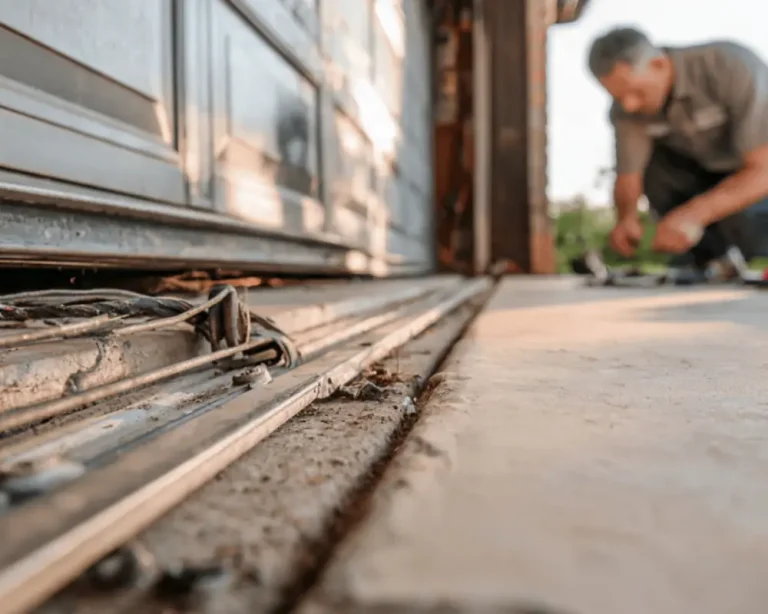
A garage door off track means one or more rollers have jumped out of the steel track channel, leaving the door unable to move properly, often hanging crooked, stuck mid-operation, or completely jammed. It is one of the most urgent garage door problems a homeowner can face because an off-track door is not just non-functional — it is a genuine safety hazard that can result in the door collapsing, property damage, or serious injury if not handled immediately and correctly.
If you are dealing with this right now in Wichita, KS, stop operating the door, disconnect the opener, and call Wichita Garage Door Experts for same-day off-track repair. If you want to understand exactly what happened, why it matters, and what comes next, keep reading.
How a Garage Door Track System Actually Works
Before diving into causes, it helps to understand the basic mechanics. Your garage door operates on a guided track-and-roller system. Two vertical tracks run up the sides of your garage opening, then curve into horizontal tracks that run along the ceiling. Rollers, which are small wheels attached to hinges along the door panels, ride inside these tracks to guide the door through each open and close cycle.
Supporting all of this are the torsion or extension springs above the door, the lift cables connecting the door to the spring drum, and the garage door opener that drives the whole mechanism. Every single component works in coordination. When one part fails, the entire system is affected, and the rollers are often the first thing to suffer.
Read More: Garage Door Opener Making a Grinding Noise? Here’s Why
The Most Common Causes of a Garage Door Going Off Track
Understanding what put your door in this situation is just as important as fixing it, because a repair that only addresses the symptom without finding the root cause will lead to the same problem happening again.
Accidental Vehicle or Object Impact
This is one of the leading causes. A vehicle bumping the door while it is still closing, a ladder stored too close falling into the track, or a child’s bicycle knocking into the door frame can all cause enough force to bend a track section or dislodge a roller. Even a glancing impact at low speed can create a small kink in the metal that eventually causes repeated derailment.
Worn or Broken Rollers
Garage door rollers do not last forever. Nylon rollers typically have a service life of around seven to ten years under normal use. As they wear down, they flatten, crack, or develop flat spots that prevent smooth movement inside the track channel. A compromised roller can pop out during normal operation, and the door immediately loses its guided path on that side.
Broken or Frayed Lift Cables
Your garage door cables work in tandem to raise and lower the door evenly on both sides. When one cable snaps or slips off the drum, one side of the door drops faster than the other. This uneven movement puts extreme lateral stress on the rollers, forcing them out of the track. This is one reason why a cable repair and an off-track repair often go hand in hand.
Damaged, Bent, or Loose Tracks
The tracks themselves can be the problem. Metal tracks can bend from impact, loosen at the mounting brackets over time due to vibration, or develop gaps at the curved transition point between vertical and horizontal sections. Rust is also a factor in climates with significant moisture, as it degrades the track’s interior surface and causes rollers to catch and bind. Even a small gap or kink in the track is enough to eject a roller during operation.
Broken Torsion or Extension Springs
Your garage door springs carry the full counterbalanced weight of the door. A typical residential garage door weighs between 130 and 300 pounds. When a spring breaks, that counterbalance is suddenly gone on one or both sides. The door becomes extremely heavy and unbalanced, and the rollers are forced to deal with load distribution they were never designed to handle. This almost always leads to an off-track situation or a door that falls completely.
Forcing a Sticking Door
If a garage door is starting to stick or hesitate during operation and someone forces it open by repeatedly triggering the opener or pushing it manually, the lateral stress on the panels and rollers can be severe enough to cause immediate derailment. Many homeowners do not realize the door was already showing warning signs before it fully went off track.
Debris Inside the Track Channel
Screws, small tools, leaves, dirt buildup, or hardened grease can lodge inside the track and block roller movement. When the opener continues to drive the door against that obstruction, the roller is forced out rather than rolling over it.
Opener Force Settings Too High
If your garage door opener is calibrated with too much drive force, it will power through resistance rather than stopping. This is supposed to be a safety feature that prevents entrapment, but when the sensitivity is set incorrectly, the opener can actually distort the door structure by forcing it through friction and resistance, contributing to track derailment over time.
Read More: Why You Should Never Replace Garage Door Springs Yourself
What Are the Real Risks of an Off-Track Garage Door?
This is not a repair you can postpone until next week. The risks of leaving an off-track door in place, or worse, continuing to operate it, are serious on multiple levels.
Collapse and Physical Injury
A garage door that has come off its track is structurally unstable. Its weight is no longer properly supported and distributed through the track system. In this state, the door can fall suddenly, with little to no warning. A standard residential door weighing even 150 pounds can cause catastrophic injury to anyone standing beneath or nearby. Children and pets are at particular risk because they may not recognize the danger of a door that looks partially normal.
Cascading Component Damage
Operating an off-track door, even once, creates a chain reaction of additional damage. The rollers grind against the track walls, bending them further. The panels shift under uneven stress and can crack or warp. The opener motor strains against the resistance and can burn out. The springs and cables absorb extra load they were not designed for, accelerating wear or causing immediate failure. What starts as a single off-track roller can quickly become a repair involving the tracks, cables, springs, panels, and opener all at once.
Home Security Compromise
Your garage door is one of the largest entry points into your home. A door that is stuck open or cannot fully close leaves your home exposed to theft, vandalism, and weather. Rain, wind, and extreme Kansas temperatures can damage everything stored inside, and an unsecured garage is an obvious target for opportunistic intruders. This is why the team at Wichita Garage Door Experts offers 24/7 emergency repair service — because an off-track door at 11 PM is not a problem you can wait until morning to address.
Vehicle Entrapment
If your car is parked inside the garage when the door goes off track, you may find yourself completely trapped. Forcing the door open in this situation risks full collapse onto the vehicle or worse. Emergency professional service is the right call here.
Warning Signs to Catch It Before It Fully Derails
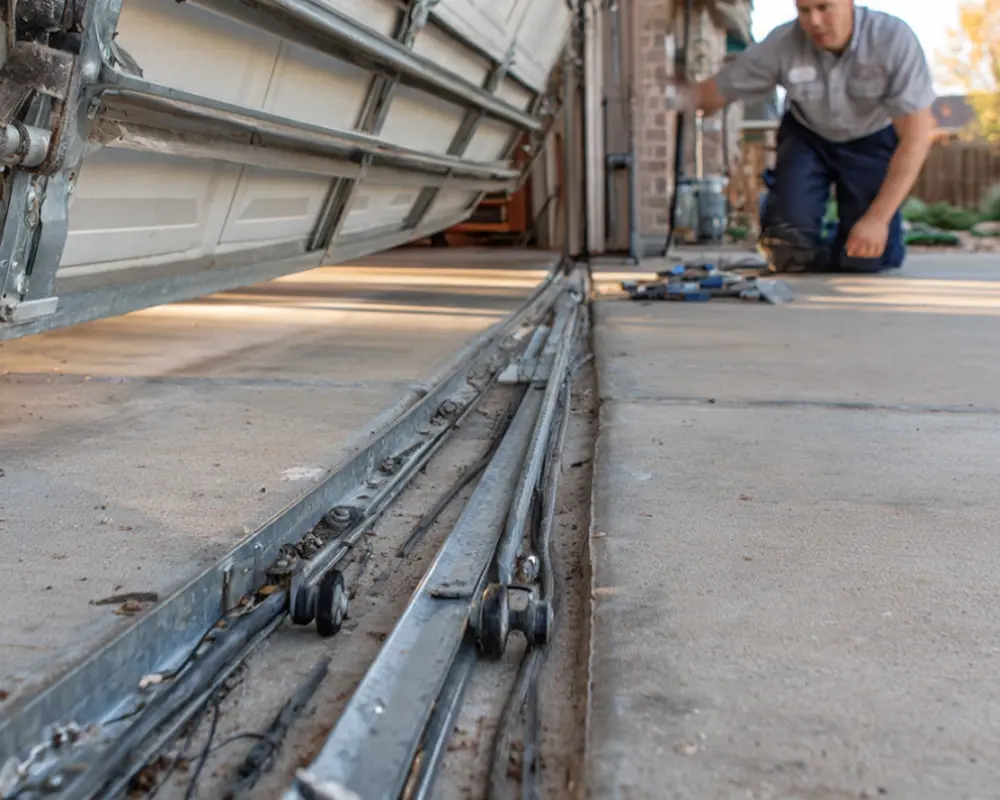
An off track garage door rarely happens without warning. Catching the early signs can save you from a full derailment and a much costlier repair.
The door moves unevenly or one side appears higher than the other during operation. You hear grinding, scraping, or a loud popping sound when the door moves. The door hesitates, shakes, or jerks rather than moving smoothly. You can visibly see a gap between the roller and the inside of the track. The door appears crooked or slightly tilted when closed. The garage door opener strains or stops mid-cycle more frequently than usual. There is a loud bang, which often signals a spring break that immediately puts the door at off-track risk.
Any one of these signs is a reason to stop using the door and call for an inspection before the situation becomes an emergency. Wichita Garage Door Experts can diagnose these early warning signs and address them before they become a full structural failure.
What to Do Immediately If Your Garage Door Goes Off Track
The steps you take in the first few minutes matter a lot, both for your safety and for limiting further damage to the door system.
Step one: Stop using the door immediately. Do not attempt to open or close it again, either with the remote or manually. Every additional cycle worsens the damage and increases the collapse risk.
Step two: Disconnect the garage door opener. Pull the red emergency release cord that hangs from the opener rail. This disengages the motor from the door so the opener cannot be accidentally triggered while the door is unstable.
Step three: Secure the area. Keep children, pets, and anyone not involved in the assessment away from the garage door entirely. Do not park a vehicle under or near the door.
Step four: Do a visual inspection only. Look for visible bent tracks, broken rollers, frayed cables, or misaligned panels. Do not touch the door, do not attempt to push rollers back into the track manually, and do not apply force of any kind.
Step five: Call a professional. This is the step that protects your safety and your wallet. A garage door off its track is under unpredictable spring tension and the weight of the door itself. Attempting a DIY fix without the proper tools and training can result in the door falling on you or causing damage that turns a moderate repair into a complete door replacement.
Read More: How to Tell If Your Garage Door Torsion Spring Is Broken
Why DIY Off Track Repair Is Genuinely Dangerous
This bears its own section because the temptation to just “pop the roller back in” is understandable but genuinely risky. An off-track door is not the same as a squeaky hinge or a loose doorknob. The torsion spring system stores an enormous amount of mechanical energy. The door itself is hundreds of pounds. Even a partial derailment leaves the weight distribution unpredictable.
Attempting to manually reset a roller without first properly relieving spring tension, clamping the door to prevent movement, and inspecting every connected component can result in sudden door collapse, snapped cables whipping under tension, or aggravated injury from misdirected force. This is a job where the tools matter as much as the knowledge, and professional technicians carry both. In situations like this, it is always safer to contact a trusted provider for emergency garage door repair Durham NC ([insert your link here]) rather than attempting a risky DIY fix.
How Professionals Repair a Garage Door Off Track
When a trained technician from Wichita Garage Door Experts arrives for an off-track garage door repair, the process is systematic and thorough rather than a quick roller reset.
The technician first stabilizes the door using clamps or supports to prevent any unexpected movement during the repair. Spring tension is carefully managed before any adjustment is made to the door position. The full system is then inspected, including the vertical and horizontal tracks for bends, kinks, and loose mounting brackets; all rollers for wear, cracking, or flat spots; hinges for looseness or breakage; lift cables for fraying or drum slippage; and the spring system for balance and integrity.
The root cause is identified and addressed, not just the symptom. The rollers are guided back into the track channel and the door alignment is corrected on both sides. Hardware is tightened and replaced where necessary. The door is tested through multiple cycles to confirm smooth, consistent movement before the technician considers the job complete.
A simple derailment with no additional hardware damage can take 30 to 60 minutes. If rollers, track sections, cables, or springs need replacement alongside the realignment, expect one to two hours. Because Wichita Garage Door Experts service vehicles are stocked with common replacement parts, most repairs are completed in a single visit.
How to Prevent Your Garage Door From Going Off Track Again
Once your door is repaired, a few ongoing habits will significantly reduce the chance of this happening again.
Arrange a professional inspection and lubrication service at least once a year. A technician will catch worn rollers, loose brackets, and track misalignment before they cause a failure. If you have nylon rollers, proactively replacing them every seven to ten years is far cheaper than emergency off-track repair. Keep the track channels clean and free of debris, and apply a garage-door-rated lubricant to the rollers, hinges, and tracks every six months. Never force a hesitating door open. If the door resists, stop, disconnect the opener, and call for service. Avoid storing items directly against the tracks or in positions where they could fall into the track channel during operation. If your vehicle backs into the door frame, have the tracks inspected immediately even if nothing looks visibly wrong at first.
Frequently Asked Questions About Garage Door Off Track Repair
Can I drive my car under an off-track door to get it out of the garage?
No. An off-track door is structurally unstable and can fall without warning. Call Wichita Garage Door Experts for emergency service and explain that a vehicle is trapped. Same-day emergency response is available.
Will my garage door go off track again after it is repaired?
Not if the underlying cause is properly identified and corrected. A quality repair addresses why the door derailed, whether that was a worn roller, bent track section, broken cable, or hardware failure, not just the symptom of the misaligned door.
How long does an off-track repair take?
A straightforward realignment with no replacement parts needed takes 30 to 60 minutes. If rollers, hinges, cable hardware, or track sections require replacement, expect one to two hours.
Is an off track garage door covered by homeowner’s insurance?
In some cases, if the cause was a covered event like storm damage or vehicle impact, it may be. Check with your insurance provider. Either way, Wichita Garage Door Experts provides transparent, itemized quotes before any work begins.
What is the difference between a slightly off track door and a severely off-track door?
A slightly off-track door may still appear to move but will show resistance, noise, or uneven movement. A severely off-track door will not move at all or will visibly hang crooked with rollers clearly outside the track. Both require professional service, but severe cases are more urgent because the collapse risk is greater.
Get Your Garage Door Back on Track in Wichita, KS
A garage door off track is not a wait-and-see problem. The longer it sits unrepaired, the more the surrounding components absorb stress and deteriorate. What starts as a single displaced roller can progress to damaged panels, a burned-out opener motor, and compromised springs if left alone.
Wichita Garage Door Experts has served Wichita, KS and surrounding Sedgwick County communities for over five years with same-day service, honest pricing, licensed technicians, and a workmanship guarantee on every repair. Whether your door just went off track, you heard a loud bang this morning, or you have been ignoring a grinding noise for weeks, the time to call is now.
Reach the team at Wichita Garage Door Experts to schedule same-day off-track repair or request a free estimate. Phones are answered 24 hours a day, seven days a week, because garage door emergencies do not wait for business hours.
An off track door is just one of several reasons a garage door can stop working. For a full breakdown of every common cause, see our complete garage door won’t open troubleshooting guide.
